How to Connect ChatGPT with Your Apps Using Composio for Enhanced Productivity in 2026
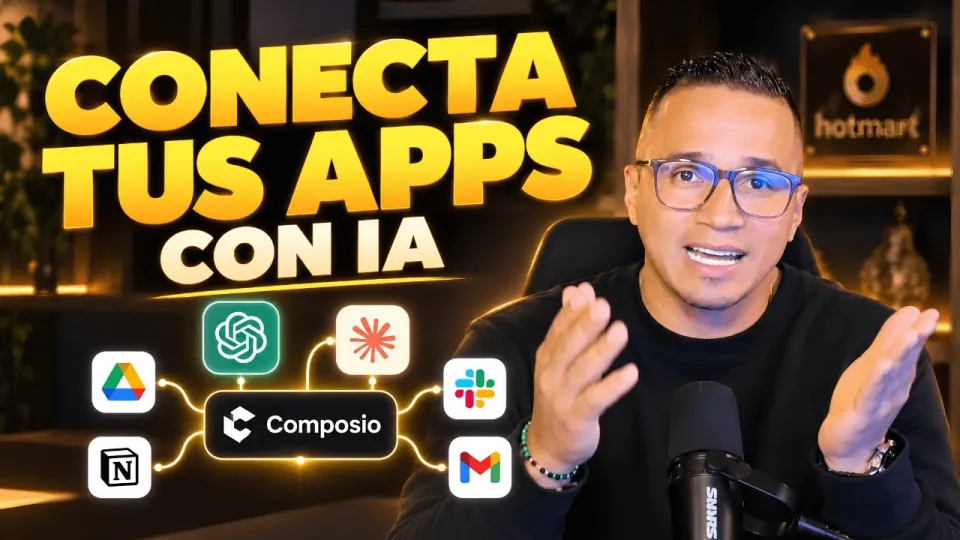
Video: Conecta ChatGPT, Claude y tus apps: así haces más con Composio
· based on the channel DataEdu
Connecting ChatGPT with your applications has become straightforward and powerful thanks to Composio, a platform that facilitates seamless AI assistant integrations with the tools you already use. By leveraging Composio, you can automate workflows, enhance productivity, and unlock new capabilities by connecting ChatGPT, Claude, Manus IA, and other AI assistants to apps like Google Drive.
Understanding Composio Connectors for AI Integration
Composio uses two main types of connectors to bridge AI assistants with external applications: native connectors and external connectors. Native connectors are built directly into Composio and offer streamlined, optimized integration experiences. External connectors rely on third-party APIs and require additional configuration.
With these connectors, you can authorize accounts, define permissions, and access specific actions that each integration supports. For example, connecting Google Drive allows AI assistants to read, write, or modify files based on granted permissions.
Steps to Connect ChatGPT to Google Drive via Composio
- Create or log into your Composio account.
- Select Google Drive from the list of available connectors.
- Authorize Composio to access your Google Drive account by granting necessary permissions.
- Choose the actions ChatGPT will perform, such as file retrieval or content generation.
- Test the integration by instructing ChatGPT to interact with your Drive files.
This process ensures a secure and efficient connection, enabling ChatGPT to assist with document generation, data extraction, or file management directly.
Extending AI Integrations Beyond ChatGPT with Composio
While ChatGPT is widely popular, Composio supports other AI assistants like Claude and Manus IA. Each assistant offers unique strengths and integration possibilities depending on available connectors.
By applying the same connection principles, users can combine multiple AI tools with their workflows. This flexibility allows for richer automation scenarios, such as using Claude for semantic analysis alongside ChatGPT for natural language generation.
Managing Permissions and Security Considerations
When connecting AI assistants to applications with sensitive data, such as Power BI semantic models, careful permission management is crucial. Composio provides granular control over what actions AI assistants can perform, minimizing security risks.
Users should review requested permissions thoroughly before authorization and monitor integrations regularly. This approach ensures that sensitive data remains protected while benefiting from AI-powered automation.
Common Questions and Concerns About Composio AI Connections
Many users wonder about the safety of connecting AI assistants to their apps and how to configure integrations effectively. Typical concerns include data privacy, accuracy of AI actions, and compatibility with various applications.
Composio addresses these issues by:
- Offering transparent permission requests.
- Supporting a wide range of app connectors.
- Providing detailed documentation and tutorials to guide users.
Useful Links
- DataEdu Storytelling Book – Transform dashboards into clear, professional stories
- Excel DataEdu – Automate data analysis faster
- Learn DAX for advanced data analysis
- Follow DataEdu on Instagram
- Connect with DataEdu on LinkedIn
Conclusion
Connecting ChatGPT and other AI assistants to your applications using Composio empowers you to automate tasks and enhance productivity effortlessly. This integration supports native and external connectors, with Google Drive serving as a prime example for managing authorizations and permissions. By adopting Composio, you can combine AI tools like Claude and Manus IA with your apps, creating versatile workflows tailored to your needs.
For more detailed guidance and practical examples, explore resources from the DataEdu channel and consider their storytelling book to master data presentation and AI integration storytelling techniques. Visit DataEdu Storytelling Book to get started.
Key takeaways
- Composio enables native and external connectors for AI integrations.
- Supports connections with ChatGPT, Claude, Manus IA, and more.
- Google Drive integration demonstrates account authorization and permission management.
- Automation with AI assistants enhances productivity and workflow efficiency.
- DataEdu provides tutorials and resources for mastering AI app integrations.
Questions & answers
Is it safe to connect Composio to applications that contain sensitive data like Power BI models?
Connecting Composio to sensitive applications requires careful permission management. Composio allows users to control and limit AI assistant access to specific actions, helping protect sensitive data while enabling automation.
What types of connectors does Composio use to integrate AI assistants with apps?
Composio uses native connectors built into the platform for seamless integration and external connectors that rely on third-party APIs, providing flexibility depending on the application.
Can Composio connect AI assistants other than ChatGPT?
Yes, Composio supports multiple AI assistants including Claude and Manus IA, allowing users to leverage different AI capabilities within their workflows.
How do I authorize my Google Drive account in Composio for AI integration?
You select Google Drive as a connector in Composio, then grant the required permissions during the authorization process, allowing AI assistants to perform actions like reading or writing files securely.
Source: Conecta ChatGPT, Claude y tus apps: así haces más con Composio · Markdown version